


Aid Resupply Is Not Enough for Full Recovery
In recent weeks, aid agencies have reported some improvement in access to Gaza, but it’s far from a full recovery. According to aid groups, essential proteins like meat and poultry remain nearly impossible to obtain through humanitarian channels. Yahoo
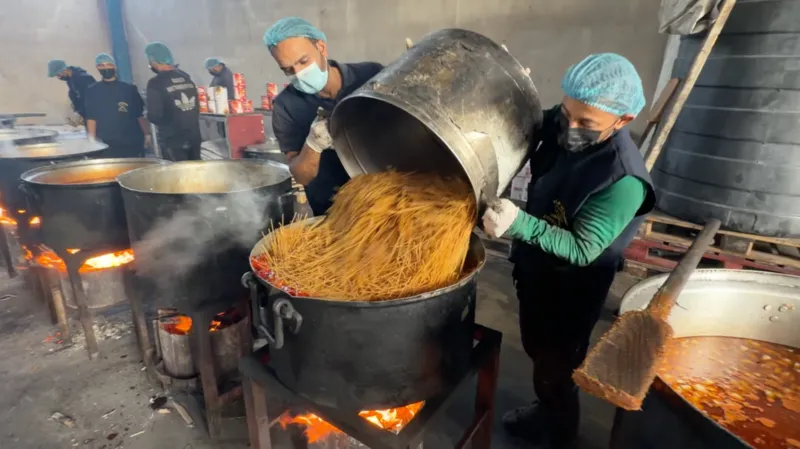
Anera, one NGO operating community kitchens, says that despite scaling up operations (from 15 to more than 120 cooking pots daily), they can’t source the fresh, nutritious items that make hot meals truly sustaining. Yahoo
WFP Stocks Depleted — A Dire Warning
The World Food Programme (WFP) has announced that it has run out of its food stocks in Gaza. Its final food reserves were delivered to hot-meal kitchens, but those are expected to run dry imminently.
That’s especially alarming given that hot-meal kitchens have been among the most consistent food sources for civilians. Many of these kitchens now operate with extremely limited rations — serving only a quarter of their target capacity.
Bakery Closures and Fuel Scarcity
It’s not just cooked meals that are affected. As of late March, all 25 WFP-backed bakeries in Gaza were forced to close. The reason? A devastating shortage of wheat flour and cooking fuel.
Without these bakeries, hundreds of thousands of people lose access to basic, affordable bread — a staple that many rely on during prolonged crises.
Skyrocketing Prices Exacerbate the Problem
Even when supplies do trickle in, they often come at costs far beyond what most Gazans can afford. According to reports:
-
Cooking gas prices have surged by 4,000% since the ceasefire.
-
Food products like onions, eggs, and meat remain either unavailable or in very low supply.
-
Empty shelves are widespread — many shops are operating at less than 40% of their stock capacity.
These price hikes make it harder for kitchens to buy ingredients for nutritious meals, forcing them to rely on diluted or incomplete recipes.
Kitchens Shutting Down — A Looming Collapse
Dozens of community kitchens — sometimes called “tekiya” kitchens — are at risk of shutting down entirely. Deutsche Welle+2Yahoo+2 One major aid provider, World Central Kitchen (WCK), has already suspended many of its operations after running out of essential supplies. The Times of Israel
PNGO (Palestinian Non-Governmental Organization Network) warns that if the shortages continue, the remaining kitchens may close within days.
The Human Impact: Nutrition, Health, and Dignity
These kitchens once served as a vital buffer: providing hot, nutritious meals to internally displaced people, families with no income, and those who can’t afford to buy food at inflated market prices.
Now, with protein items missing (like meat and chicken), diets are becoming less balanced and more calorie-poor. Aid workers say they’ve only served meat once in months — from canned sources.
Volunteers are being forced to cook over makeshift stoves, often using wood or debris as fuel. The nutritional quality of meals is dropping, raising serious health concerns, especially for children, pregnant women, and the elderly.
Why the Shortages Are Still Ongoing
Several factors explain the persistent gaps in kitchen supplies:
-
Aid Blockade & Logistics: Even during the ceasefire, border crossings remain unpredictable. Supplies are stranded, and distribution is hampered by logistical constraints. United Nations+1
-
High Prices: Major food items and fuel are now prohibitively expensive in local markets.
-
Insufficient Diversity of Aid: The aid that does make it in often lacks nutritional diversity. Aid organizations report receiving mostly staples like rice and legumes, but little or no protein or fresh produce.
-
Depleted Emergency Stocks: WFP’s last reserves were given to community kitchens, but without resupply, the buffer is rapidly running out.
Why This Matters: Beyond Just Food
This isn’t just a matter of hunger — it’s a humanitarian, moral, and public-health crisis. When community kitchens collapse:
-
Vulnerable populations lose their last dependable source of nutrition.
-
Malnutrition risk rises sharply, especially among children and the elderly.
-
Local markets may become even more dysfunctional, with fewer safety nets.
-
The very notion of dignity takes a hit — cooking a hot meal for your family shouldn’t feel like a struggle for survival.
Calls for Action
Humanitarian agencies and United Nations bodies are urgently calling for:
-
Reopening of border crossings to allow more diverse and nutritious aid — including protein and cooking supplies.
-
More fuel deliveries to support kitchen operations and energy for cooking.
-
Targeted nutritional aid that is not just calories, but balanced, sustainable food.
-
Safe humanitarian corridors to enable consistent resupply without risk to aid workers.
Conclusion
While the ceasefire offered a brief window of hope, the reality on the ground in Gaza remains bleak for many food kitchens. Critical shortages of protein, cooking fuel, and basic ingredients are undermining the ability of these essential community kitchens to serve their purpose. Even as some aid makes it through, the scale and quality of that aid fall far short of the need.
For thousands of Gazans, these kitchens aren’t just places to eat — they’re lifelines. Without urgent, sustained support, these lifelines risk breaking. The international community must act swiftly to ensure that relief is not just provided, but effective, diverse, and predictable.