

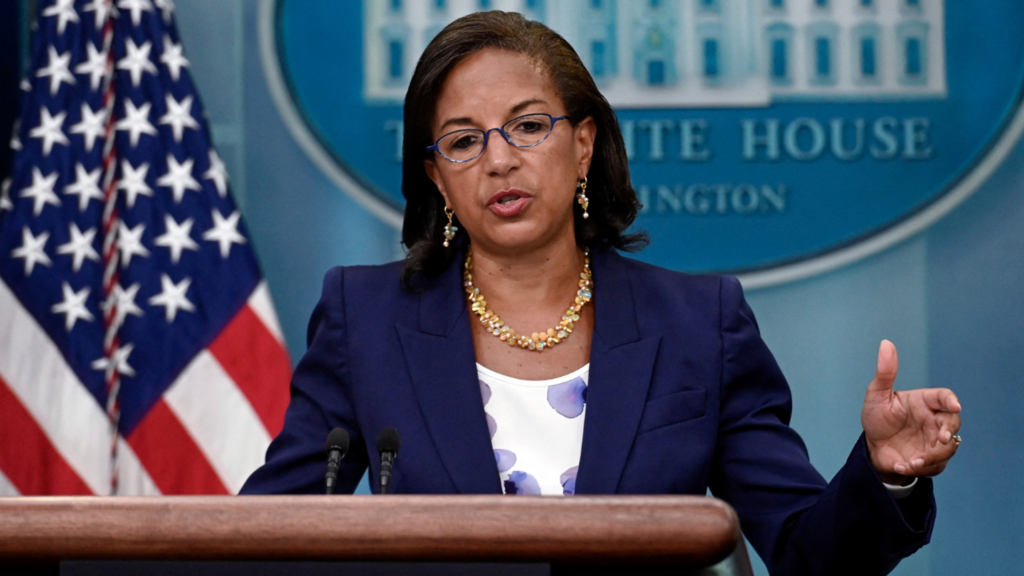

A political storm is brewing after a former senior official from the Biden administration made comments that critics are calling a “thinly veiled warning” to corporations, media, and institutions.
The remarks have ignited fierce debate across Washington, raising serious questions about political retaliation, corporate influence, and the future relationship between government and private industry.
What Was Said?
The controversy centers around comments made by Susan Rice, a former top advisor in both the Biden and Obama administrations.
During a recent podcast appearance, Rice suggested that companies and institutions aligning themselves with former President Donald Trump could face consequences if Democrats regain power.
Her message included warnings that:
-
Corporations, universities, and media organizations should “play the long game”
-
Those supporting Trump-era policies may be “held accountable” in the future
-
Political shifts in power could bring lasting consequences for certain institutions
These comments quickly drew national attention—and criticism.
Immediate Backlash from Republicans
One of the strongest responses came from John Kennedy, who condemned the remarks as dangerous and inappropriate.
Kennedy argued that the comments suggest a willingness to use government power to target political opponents, stating that such rhetoric represents “payback” politics.
He also warned that:
-
Political retaliation could undermine democratic norms
-
Both parties should avoid weaponizing government institutions
-
Escalation of such tactics could damage public trust
The criticism reflects broader Republican concerns about government overreach and political bias.
The Bigger Issue: Political Retaliation
At the heart of the controversy is a growing fear in American politics—the weaponization of government power.
Critics argue that Rice’s comments imply:
-
Future administrations could punish companies based on political alignment
-
Businesses may feel pressured to support certain policies or risk consequences
-
The line between governance and political retribution is becoming blurred
Supporters, however, may interpret her remarks differently—seeing them as a warning about accountability rather than retaliation.
Business Community on Edge
The implications of this controversy extend far beyond politics.
For corporations, universities, and media organizations, the message raises serious concerns:
-
Should businesses stay neutral in political matters?
-
Could political alignment affect future regulations or treatment?
-
Is corporate activism becoming a liability?
In today’s polarized environment, even perceived political affiliations can carry significant risks.
A Pattern of Escalating Political Tensions
This incident is part of a broader trend in U.S. politics, where both sides increasingly accuse each other of:
-
Using legal systems to target opponents
-
Applying pressure on private institutions
-
Blurring the boundaries between politics and governance
Senator Kennedy himself noted that this cycle of retaliation could spiral if not addressed by leaders on both sides.
What It Means Moving Forward
The backlash surrounding Rice’s comments could have lasting consequences:
1. Increased Political Polarization
Statements like these deepen divisions between parties and their supporters.
2. Corporate Caution
Businesses may become more cautious about political involvement.
3. Policy Implications
Future administrations could face scrutiny over how they interact with private entities.
4. Public Trust at Stake
Concerns about fairness and neutrality in government may continue to grow.
Bottom Line
The backlash against Susan Rice highlights a critical moment in American politics—where words alone can trigger nationwide debate about power, accountability, and the limits of political influence.
As tensions rise, the central question remains:
Where should the line be drawn between accountability and retaliation?
The answer could shape not just future elections—but the relationship between government, business, and the American public for years to come.