

Maduro in U.S. Custody After Dramatic Capture
Former Venezuelan President Nicolás Maduro has arrived in New York City after being captured by U.S. forces in a daring military operation in Caracas earlier this week. Maduro and his wife, Cilia Flores, were flown to the United States to face federal criminal charges, and his arraignment is expected as soon as Monday in the Southern District of New York.
Historic Capture and Transfer to the United States
The U.S. military carried out a large-scale operation in Venezuela that resulted in Maduro’s capture after months of escalating pressure from the Trump administration. U.S. forces apprehended Maduro and Flores in Caracas and transported them to a U.S. warship before flying them to New York.
The couple landed at Stewart Air National Guard Base, about 60 miles northwest of Manhattan, before being taken into federal custody. Video and eyewitness reports showed Maduro being escorted off the plane by U.S. law enforcement officials.
Charges Maduro Faces in U.S. Court
Maduro’s arrival in New York follows the unsealing of a superseding indictment in the Southern District of New York that accuses him, his wife, and several close associates of narco-terrorism and drug trafficking. Prosecutors allege Maduro led a corrupt regime that used state institutions to traffic cocaine into the United States in collaboration with violent criminal organizations.
The indictment also includes charges for possession and conspiracy to possess machine guns and destructive devices. Flores is alleged to have brokered arrangements with major traffickers and accepted bribes.
Where Maduro Is Being Held
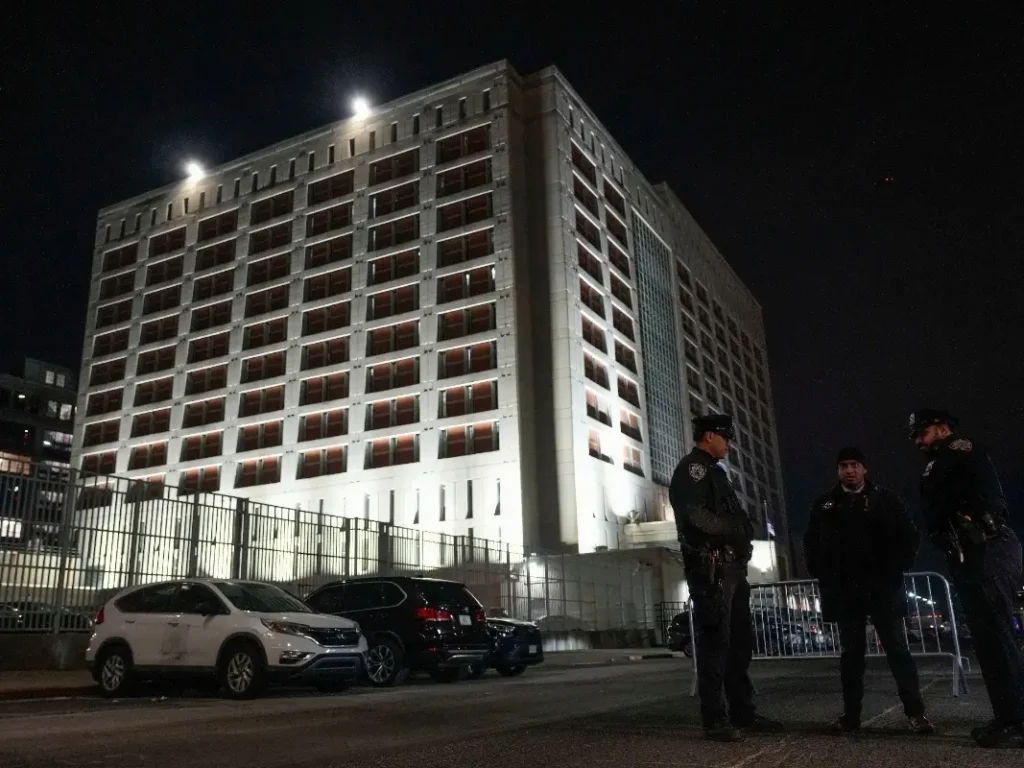
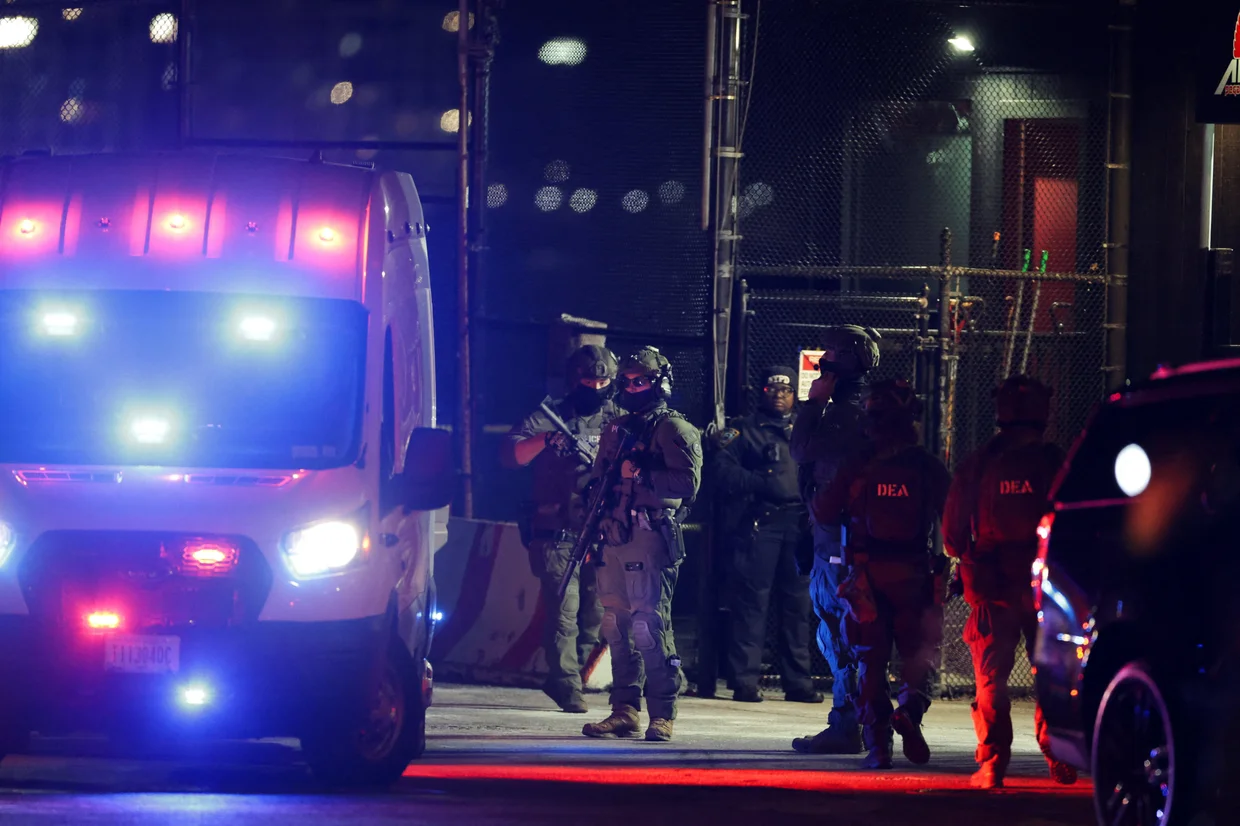
After landing in New York, Maduro was transferred to the Metropolitan Detention Center (MDC) in Brooklyn, a high-security federal facility that houses other notorious inmates. Security surrounding the facility has been heightened, though New York officials say there are currently no credible threats to public safety.
MDC is known for detaining high-profile defendants and has the capacity to securely hold individuals awaiting federal arraignment.
Arraignment Expected Monday
Sources familiar with the situation say Maduro could be arraigned in federal court as early as Monday. The arraignment will occur before a judge in the Southern District of New York, where Maduro and Flores will officially be charged and enter pleas in connection with the indictment.
This court appearance marks an unusually high-profile moment involving a formerly sitting head of state being brought to the United States to face criminal proceedings — a rare occurrence on the world stage.
International and Domestic Reactions
The capture and transfer of Maduro have triggered widespread reactions around the world. Some international leaders praised the move as a step toward accountability, while others condemned it as a violation of Venezuela’s sovereignty and international law.
Within the U.S., political leaders are divided. Supporters of the operation argue it brings a notorious trafficker and alleged narco-terrorist to justice. Critics, including some lawmakers and legal experts, have raised concerns about the legality of the military operation without explicit congressional authorization.
Ongoing Venezuelan Political Crisis
Maduro’s capture and upcoming arraignment mark a dramatic escalation in the Venezuelan political crisis, which has seen years of internal unrest, economic collapse, and international tension. Prior to his capture, Venezuela’s Vice President Delcy Rodríguez declared herself acting president, though her legitimacy is contested and was not fully confirmed.
The U.S. has previously accused Maduro of corruption, narco-terrorism, and trafficking, leading to the 2020 indictment that was executed with the recent military operation.
What to Expect Next
As Maduro awaits arraignment, attention will focus on:
-
Monday’s federal court appearance in the Southern District of New York;
-
The U.S. government’s handling of the unprecedented legal process; and
-
International diplomatic fallout from the capture and transfer.
Maduro’s arraignment could set the stage for a complex legal battle on drug and narco-terrorism charges, while deepening debates over the use of military force in international law enforcement.
Conclusion: A Pivotal Moment in Venezuelan and U.S. Relations
The arrival of Nicolás Maduro in New York after his capture by U.S. forces underscores a dramatic chapter in the U.S.–Venezuela relationship and international law enforcement. As Maduro prepares to face arraignment, the unprecedented move raises critical questions about sovereignty, justice, and the future of Venezuela’s political landscape.