

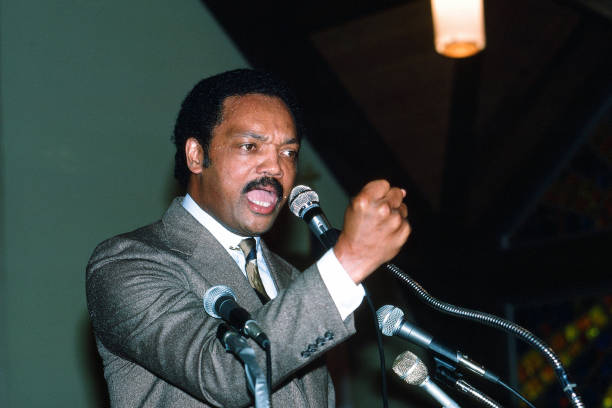

Tributes are pouring in from across the United States and around the world for legendary civil rights leader Jesse Jackson, whose decades-long fight for racial justice, economic equality, and political empowerment helped reshape modern American history.
From political leaders, clergy members, activists, and everyday Americans honoring the life and legacy of Jesse Jackson, one of the most influential civil rights figures of the last half-century.
As news spreads, social media platforms, churches, universities, and political institutions are reflecting on Jackson’s decades-long fight for racial equality, economic justice, voting rights, and global human rights.
His legacy is not just historical — it remains deeply connected to today’s political and social debates.
Who Was Rev. Jesse Jackson?
Rev. Jesse Jackson rose to national prominence during the 1960s Civil Rights Movement, working closely with Martin Luther King Jr.. After King’s assassination in 1968, Jackson emerged as a leading voice for justice, continuing the work of nonviolent activism and community empowerment.
In 1971, he founded Operation PUSH, which later merged into the Rainbow/PUSH Coalition. These organizations focused on economic empowerment, corporate accountability, education access, and political inclusion for marginalized communities.
Over time, Jackson became not only a civil rights activist but also a national political force.
Historic Presidential Campaigns That Changed the Political Landscape
In 1984 and 1988, Jackson made history by running for President of the United States, becoming one of the first African American candidates to mount serious nationwide campaigns.
His 1988 campaign, in particular, energized millions of voters and expanded political participation among minority communities, young voters, and progressive coalitions. His “Rainbow Coalition” strategy aimed to unite diverse groups — Black, Latino, working-class white voters, farmers, labor unions, and peace activists — under a shared vision of economic fairness and civil rights.
Many political analysts say Jackson’s campaigns helped pave the way for future leaders, including Barack Obama, whose historic 2008 victory marked a milestone many believe was influenced by the groundwork Jackson laid decades earlier.
National and Global Influence
Jackson’s influence extended beyond U.S. borders. Over the years, he participated in international diplomatic efforts, advocating for:
-
The release of political prisoners
-
Anti-apartheid activism in South Africa
-
Human rights reforms
-
Global peace initiatives
He often acted as an unofficial diplomat, leveraging relationships to negotiate humanitarian outcomes during international crises.
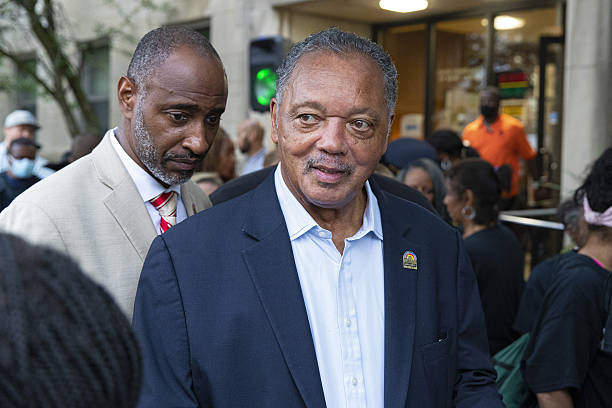
Tributes From Across the Political Spectrum
Public figures from both major political parties have acknowledged Jackson’s impact. Civil rights leaders credit him with keeping the movement alive during difficult political eras. Faith leaders emphasize his moral voice rooted in Christian ministry and social justice.
Younger activists say his message of coalition-building remains relevant in today’s climate of political polarization.
Common themes in tributes include:
-
His tireless advocacy for voting rights
-
His push for corporate diversity and inclusion
-
His commitment to economic justice
-
His belief in peaceful protest and political engagement
Many describe him as a “bridge builder” who sought to unite communities rather than divide them.
A Complex but Powerful Legacy
Like many prominent leaders, Jackson’s career included moments of controversy. Critics occasionally questioned certain political strategies or statements. However, even many critics acknowledge the undeniable role he played in shaping modern American politics.
Over more than five decades, Jackson consistently addressed issues such as:
-
Police reform
-
Educational equity
-
Healthcare access
-
Poverty reduction
-
Criminal justice reform
His influence can be seen in policy conversations that continue today.
Health Challenges and Later Years
In 2017, Jackson revealed that he had been diagnosed with Parkinson’s disease. In recent years, he stepped back from daily leadership roles but remained a symbolic and spiritual figure within the civil rights community.
Even as his public appearances became less frequent, his name remained synonymous with activism and moral leadership.
Why Jesse Jackson’s Legacy Still Matters Today
As debates over voting access, economic inequality, and racial justice continue, Jackson’s life work remains highly relevant. Many of the issues he championed — from voter registration drives to fair wages — remain central to today’s political discourse.
His “Rainbow Coalition” philosophy, focused on unity across racial and economic lines, is often referenced as a model for building inclusive political movements.
The Enduring Impact of a Civil Rights Icon
The wave of tributes pouring in reflects more than admiration — it represents recognition of a leader who transformed civic engagement in America.
Rev. Jesse Jackson helped expand who participates in democracy, who runs for office, and whose voices are heard in national debates. His legacy is etched into the fabric of American political history.
As the nation reflects on his contributions, one message echoes clearly: his fight for justice, dignity, and equality reshaped the American story — and its impact will be felt for generations to come.