

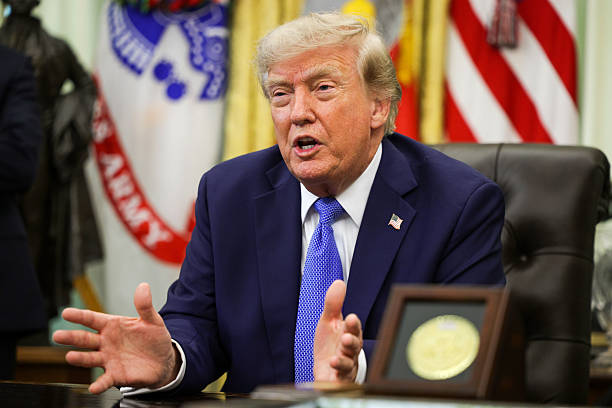

President Donald Trump has ordered the Pentagon to substantially reduce planned joint military exercises with South Korea, just hours before the annual drills were scheduled to begin.
Trump said the exercises are too expensive and argued that they send an unnecessarily hostile message to North Korea. He also pointed to his relationship with North Korean leader Kim Jong Un and criticized South Korea for declining to support U.S. efforts related to Iran.
The unexpected decision comes at a particularly sensitive moment on the Korean Peninsula. North Korea has recently resumed ballistic missile testing, while U.S. and South Korean forces had been preparing for one of their major annual military exercises.
Trump Tells Pentagon to Reduce the Drills
Trump announced Sunday that he had instructed Defense Secretary Pete Hegseth to “substantially reduce” the upcoming exercises.
The president said the drills were costly and claimed they send an inappropriate and hostile signal to North Korea.
Trump also said he was unhappy that the United States had previously agreed to participate in the exercises, citing what he described as his “very good relationship” with Kim Jong Un.
Although Trump wanted the exercises reduced, he acknowledged that it was already too late to cancel them entirely.

What Is Ulchi Freedom Shield?
The military exercises are known as Ulchi Freedom Shield, or UFS.
The annual exercise is designed to strengthen the combined military readiness of the United States and South Korea in response to potential threats from North Korea.
This year’s exercise was scheduled to run for 11 days, beginning August 17, with approximately 18,000 South Korean troops participating.
The training includes live, virtual, constructive and field-based exercises.
Military planners have also incorporated scenarios involving newer threats, including cyberattacks, drones and GPS disruptions.
Why Does Trump Want the Exercises Reduced?
Trump offered several reasons for his decision.
First, he criticized the financial cost of the military drills.
Second, he argued that the exercises send the wrong diplomatic message to North Korea.
Third, Trump linked his decision to South Korea’s refusal to participate in U.S. efforts to denuclearize Iran.
According to Trump, he recently asked South Korean President Lee Jae Myung to support the U.S. position on Iran, but Seoul declined.
The connection between South Korea’s Iran policy and the U.S.-South Korean military alliance adds a new dimension to an already complicated relationship.
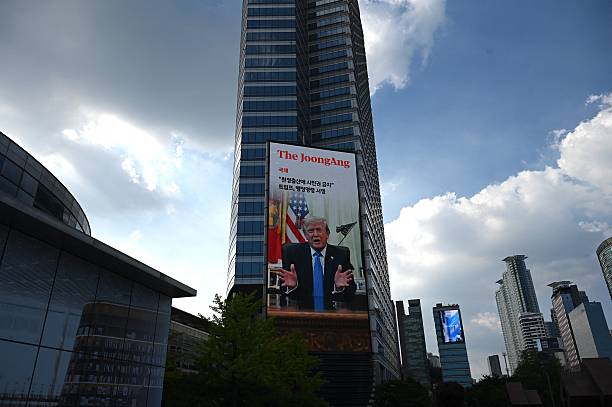
North Korea Has Strongly Opposed the Drills
North Korea has long described major U.S.-South Korean military exercises as preparations for an invasion.
Pyongyang has again condemned this year’s exercises, calling them a rehearsal for an aggressive war and warning that it could respond with unspecified measures.
The United States and South Korea, however, maintain that the exercises are defensive and designed to strengthen their ability to respond to a North Korean attack.
That disagreement has existed for decades.
Whenever major military drills are announced, North Korea frequently responds with threats, military demonstrations or weapons tests.
North Korea Has Recently Resumed Missile Testing
The timing of Trump’s decision is especially significant because North Korea has recently resumed ballistic missile activity.
On August 11, North Korea launched a ballistic missile from the Wonsan area that traveled more than 700 kilometers before landing in waters between the Korean Peninsula and Japan.
It was the country’s second reported ballistic missile launch in less than a week.
South Korea, Japan and the United States condemned the launches.
Experts have suggested that North Korea may use the joint exercises as an opportunity to justify additional weapons testing.
Trump’s Relationship With Kim Jong Un
Trump’s decision is closely connected to his long-standing diplomatic relationship with Kim Jong Un.
Trump and Kim met three times during Trump’s first presidential term in an effort to negotiate over North Korea’s nuclear program.
Those negotiations ultimately collapsed in 2019.
Since then, North Korea has continued expanding its nuclear and missile capabilities.
Nevertheless, Trump has continued to express interest in renewing diplomacy with Kim.
His latest comments suggest that preserving the possibility of renewed engagement remains an important consideration in his approach toward North Korea.
The U.S.-South Korea Alliance Faces New Questions
The decision to reduce the exercises could create concerns in Seoul about the future of the U.S.-South Korea security partnership.
The alliance has traditionally relied heavily on combined military exercises to maintain operational readiness.
These drills allow American and South Korean forces to practice coordinating their responses to potential attacks.
Reducing that training could therefore have implications beyond the immediate exercise.
Supporters of the reduction, however, argue that military exercises can be expensive and may unnecessarily increase tensions with North Korea.
Military Readiness Is at the Center of the Debate
The central question is whether reducing the drills will weaken military readiness.
U.S. and South Korean officials have repeatedly described joint training as essential to maintaining their ability to respond to North Korean threats.
The exercises allow troops from both countries to practice complex operations under realistic conditions.
Those scenarios are increasingly important as North Korea develops more sophisticated missiles, nuclear weapons and other military capabilities.
Trump’s order could therefore create a debate over whether diplomatic benefits outweigh potential reductions in military preparedness.
North Korea’s Growing Military Capabilities
North Korea has continued expanding its weapons programs since diplomatic talks with the United States collapsed.
The country has focused heavily on developing nuclear weapons and ballistic missiles.
It has also strengthened military cooperation with Russia.
North Korea has supplied troops and ammunition in support of Russia’s war in Ukraine, while experts say its forces may have gained valuable battlefield experience in the process.
That development has added another layer of concern for U.S. and South Korean military planners.
A Complicated Regional Security Environment
The Korean Peninsula is not the only region demanding U.S. military attention.
The United States is also dealing with major security challenges in the Middle East and elsewhere.
The USS George Washington, for example, is being moved from the Pacific toward the Middle East to replace the USS Abraham Lincoln.
That redeployment could further complicate the Pentagon’s efforts to maintain military resources across multiple regions.
The decision to scale back exercises with South Korea therefore comes as the United States faces competing demands on its armed forces.
South Korea’s Position
South Korea has traditionally regarded the U.S. military presence as a central component of its national defense strategy.
The two countries maintain a long-standing alliance designed to deter North Korean aggression.
South Korean forces have participated in large-scale joint exercises with U.S. troops for decades.
Any significant reduction in training could therefore require Seoul to reassess how it maintains readiness and coordinates with American forces.
Could the Decision Affect North Korea Diplomacy?
Trump appears to believe that reducing military exercises could create more favorable conditions for dialogue with Kim Jong Un.
North Korea has consistently objected to the drills.
Reducing their size could potentially remove one source of tension and provide an opening for renewed diplomatic discussions.
However, North Korea has continued expanding its nuclear arsenal despite previous reductions or suspensions of U.S.-South Korean exercises.
That makes the potential diplomatic impact uncertain.
What Happens to the Exercises Now?
The exercises are not being completely canceled.
Instead, Trump has ordered the Pentagon to substantially reduce their scope.
The precise changes to the exercise had not been fully detailed when Trump made the announcement.
The drills were scheduled to begin August 17 and continue for 11 days.
The Pentagon and South Korean military will therefore have to determine how to adjust the planned training while maintaining essential readiness.
What We Know So Far
The major developments include:
- Trump ordered the Pentagon to substantially reduce the U.S.-South Korean military exercises.
- The exercises are known as Ulchi Freedom Shield.
- The drills were scheduled to begin August 17 and last 11 days.
- About 18,000 South Korean troops were expected to participate.
- Trump criticized the financial cost of the exercises.
- He said they send an inappropriate and hostile signal to North Korea.
- Trump cited his relationship with Kim Jong Un.
- He also criticized South Korea for declining to support U.S. efforts related to Iran.
- North Korea has condemned the drills as provocative.
- North Korea has recently conducted ballistic missile tests.
- The United States and South Korea continue to describe the exercises as defensive.
The Bigger Question for the Korean Peninsula
Trump’s decision could become an important test of his strategy toward North Korea.
If reducing military exercises helps reopen diplomatic communication with Kim Jong Un, the move could become part of a broader effort to revive negotiations.
If North Korea continues expanding its nuclear and missile programs, however, critics could argue that reducing joint training has weakened deterrence without producing meaningful diplomatic concessions.
The outcome may depend largely on what Pyongyang does next.
The Bottom Line
President Donald Trump has ordered the Pentagon to substantially scale back planned U.S.-South Korea military exercises, arguing that the drills are expensive and send an unnecessarily hostile message to North Korea.
His decision also reflects his desire to preserve his relationship with Kim Jong Un and his frustration with South Korea’s refusal to assist the United States on Iran.
The move comes as North Korea resumes ballistic missile testing and continues expanding its nuclear and military capabilities.
For Washington and Seoul, the challenge will be finding the right balance between military readiness and diplomacy.
For now, the exercises will proceed in reduced form rather than being canceled altogether.
Whether that reduction ultimately lowers tensions with North Korea—or creates new concerns about the strength of the U.S.-South Korea alliance—will become clearer in the weeks ahead.