

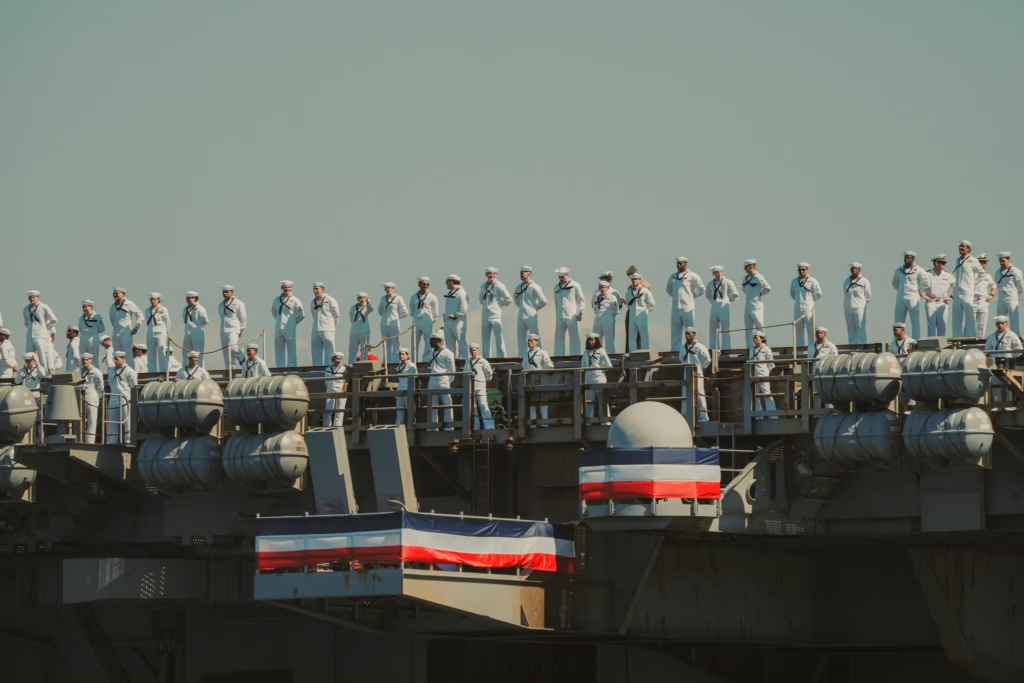

The USS Abraham Lincoln has returned to San Diego, California, bringing thousands of U.S. Navy sailors home after a demanding 321-day deployment that included months of military operations connected to the war with Iran.
The aircraft carrier’s arrival on Thursday, October 8, marked the end of an extraordinary mission that kept the crew away from home for nearly 11 months. Emotional reunions unfolded along the waterfront as families welcomed loved ones they had not seen for most of the year.
The deployment also drew national attention over concerns about prolonged time at sea, reported supply shortages, plumbing difficulties and the mental health of sailors serving under sustained operational pressure.
According to the Associated Press, the carrier spent 265 consecutive days at sea without a port call, making the deployment one of the longest in recent U.S. Navy history.
An Emotional Homecoming in San Diego
The return of the USS Abraham Lincoln was an eagerly anticipated moment for sailors and their families.
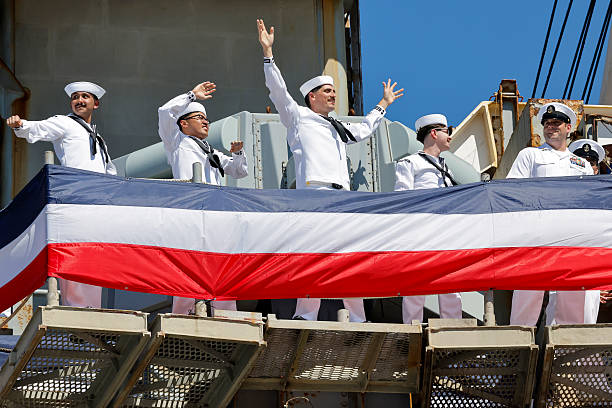
Hundreds of relatives and friends gathered near San Diego Bay to welcome the crew. As the massive aircraft carrier approached its berth, sailors stood along the ship’s decks while loved ones waved, cheered and waited for the opportunity to embrace family members.
For some families, the reunion carried special significance. Several sailors became parents during the deployment and were meeting their newborn children for the first time.
The Associated Press reported that 122 sailors, including members of the carrier’s air wing, became fathers while deployed. Their return offered families an opportunity to begin making up for months of missed milestones, birthdays and everyday moments.
For many service members, the homecoming represented more than the end of a military assignment. It marked the end of an extended separation that placed considerable emotional demands on both sailors and their families.

A Record-Breaking Deployment
The USS Abraham Lincoln departed San Diego on November 21, 2025, initially heading toward the Pacific. Its mission subsequently changed as developments in the Middle East required the carrier to operate in support of U.S. military objectives related to Iran.
The deployment ultimately lasted 321 days, with 265 consecutive days at sea without a port visit.
Such prolonged operations can place significant pressure on sailors, ships and the logistical systems responsible for keeping crews supplied, rested and operationally ready.
Aircraft carriers function as floating military bases, supporting thousands of personnel, aircraft, maintenance operations and essential services. Sustaining that level of activity over an extended period requires continuous coordination involving food, fuel, equipment, medical care and other supplies.
The Lincoln’s deployment therefore demonstrated the Navy’s ability to maintain a major combat force at sea for an extended period, while also highlighting the human and logistical costs of doing so.
USS Lincoln’s Role in the Iran Conflict
The carrier played an important role in U.S. military operations during the conflict with Iran.
According to figures cited in the Presidential Unit Citation presented to the carrier strike group, the Lincoln and its associated forces conducted nearly 3,700 combat missions, launched approximately 450 Tomahawk cruise missiles, shot down 77 one-way attack drones, sank 64 Iranian warships and destroyed 21 anti-ship cruise missiles.
These figures illustrate the scale of the operations attributed to the strike group during its deployment.
The carrier’s aircraft and supporting vessels provided military capabilities that could be sustained at sea and positioned closer to operational areas than forces based exclusively in the continental United States.
The mission also underscored the strategic importance of aircraft carriers in modern naval warfare, particularly when military operations require sustained airpower, surveillance and maritime presence.
Reports of Difficult Conditions Aboard the Carrier
Despite the operational achievements highlighted by military officials, the deployment became the subject of scrutiny following reports of difficult conditions aboard the ship.
Families of sailors raised concerns about shortages of supplies and fresh food, water availability, plumbing problems, declining morale and the emotional strain associated with prolonged separation.
Some relatives also described anxiety over limited communication with loved ones serving thousands of miles away.
The Navy acknowledged that combat operations and restricted opportunities to resupply the carrier created logistical challenges. Officials said meal options were reduced temporarily but maintained that food supplies remained adequate.
The distinction between the Navy’s official assessment and the experiences reported by some sailors and their families became an important part of the public discussion surrounding the deployment.
The reports highlighted the difficulties of maintaining normal living conditions aboard a warship operating for months without a significant opportunity to replenish supplies.
Mental Health Concerns Raise Further Questions
The deployment also brought renewed attention to the mental health of sailors serving during extended military operations.
The Navy reported that eight sailors attempted suicide during the carrier strike group’s deployment, according to reporting by the Associated Press and Reuters.
The disclosure intensified discussion about the psychological pressures associated with prolonged time at sea, demanding operational schedules and separation from family.
Extended deployments can disrupt sleep, reduce opportunities for personal recovery and make it more difficult for service members to maintain regular contact with loved ones. The effects vary from person to person, but military leaders face the continuing challenge of balancing operational demands with the well-being of their personnel.
The reports do not, by themselves, establish the cause of each individual incident. However, they underline the importance of accessible mental health services, early intervention and support for sailors returning from demanding missions.
For families, the uncertainty surrounding the crew’s conditions made the long wait for the carrier’s return especially difficult.
Defense Secretary Pete Hegseth Praises the Crew
U.S. Defense Secretary Pete Hegseth visited the carrier before its return to San Diego and presented the crew with the Presidential Unit Citation, a high-level military honor recognizing exceptional collective performance.
Hegseth praised the sailors’ resilience and commitment, emphasizing that they continued their mission despite difficult circumstances.
He also pushed back against portrayals of the carrier as a symbol of military dysfunction, arguing that the crew’s accomplishments deserved recognition.
The visit came amid public scrutiny of the length of the deployment and reports of hardship aboard the ship.
Hegseth acknowledged that resupply had not always been easy and recognized the challenges associated with keeping the crew deployed for such a long period.
The award highlighted the administration’s emphasis on the strike group’s military achievements, while concerns about living conditions and sailor welfare remained part of the broader conversation.
Why Extended Naval Deployments Matter
The Lincoln’s return raises wider questions about how the U.S. Navy manages prolonged operations during major conflicts.
Aircraft carriers provide a mobile platform for launching air operations without relying entirely on land-based facilities. Their flexibility can be strategically valuable, but sustained deployments require extensive logistical support and can place considerable demands on personnel.
Long periods away from home can affect family relationships, childcare arrangements, mental health and the ability of sailors to recover between missions.
Extended deployments may also increase maintenance demands and complicate scheduling for future operations.
The USS Lincoln’s experience demonstrates the tension between maintaining a continuous military presence in a strategically important region and ensuring that crews receive adequate rest, supplies and support.
As global security demands continue to evolve, the Navy will need to consider both operational readiness and the long-term sustainability of its deployment practices.
What Happens Next for the USS Abraham Lincoln?
With the carrier back in San Diego, the crew can begin transitioning from deployment duties to time with family, recovery and other post-deployment requirements.
The return also provides an opportunity for the Navy to assess the operational and logistical lessons of the mission.
Such reviews can help military leaders identify areas for improvement in supply planning, crew welfare, maintenance and deployment scheduling.
The Lincoln’s return does not mean the United States is ending its broader military presence in the Middle East. The USS George Washington relieved the Lincoln in the region in August, allowing U.S. naval forces to maintain their presence while the Lincoln began its journey home.
Future deployments will depend on operational requirements, the wider security environment and decisions by U.S. military leadership.
Conclusion: A Homecoming That Highlights Both Achievement and Sacrifice
The USS Abraham Lincoln’s return to San Diego marks the end of a demanding 321-day deployment and an important moment for thousands of sailors and their families.
The carrier strike group’s reported combat achievements demonstrate the scale of the mission, while the extended period at sea highlights the physical, emotional and logistical pressures faced by military personnel during prolonged operations.
For families welcoming sailors home, the most meaningful achievement may be the chance to reunite after months of uncertainty and separation.
The deployment also leaves important questions about how the Navy can sustain combat readiness while protecting the health and welfare of its crews.
As the sailors begin their return to family life, the Lincoln’s experience will remain a significant case study in the demands of modern naval warfare—and the human sacrifices behind military operations.
Sources: Associated Press, Reuters, CBS News and USNI News reporting published October 7–8, 2026.