

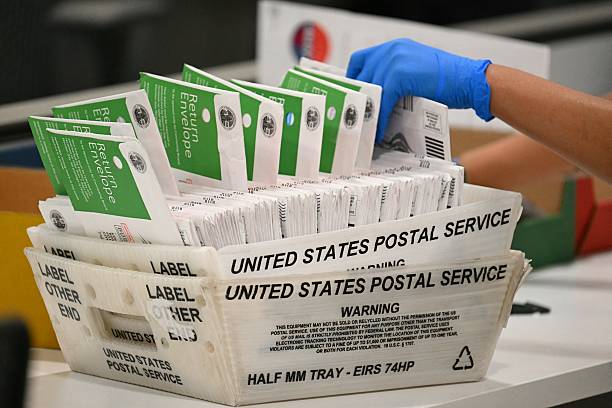


The Trump administration has asked the U.S. Supreme Court to intervene in a growing legal battle over new restrictions on mail-in voting, just weeks before Americans head to the polls for the 2026 midterm elections.
The Justice Department is seeking to overturn a federal judge’s order that temporarily blocks the administration from enforcing new U.S. Postal Service requirements for election ballots.
The latest legal move adds another layer of uncertainty for election officials who are already preparing for November’s elections.
What Are the New Mail-In Ballot Rules?
The administration’s plan stems from an executive order signed by President Donald Trump that seeks to establish tighter federal requirements for ballots sent through the U.S. Postal Service.
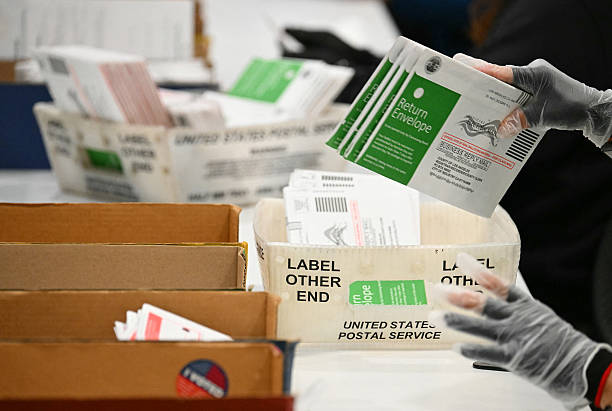
Among the proposed requirements are standardized ballot envelopes, including specific markings and unique barcodes. States would also be expected to provide voter information to the Postal Service through a federal system.
The administration argues that the changes are intended to strengthen election security and establish more uniform procedures for federal election mail.
Trump has repeatedly criticized mail-in voting and has pushed for greater restrictions on the practice.
Federal Judge Blocks Implementation
The administration’s latest Supreme Court request follows a ruling by U.S. District Judge Indira Talwani, who temporarily halted implementation of the new Postal Service requirements.
The judge raised concerns about the timing of the rollout and whether the federal government had adequate legal authority to impose the requirements so close to the midterm elections.
Election officials and voting advocates have also warned that changing ballot procedures shortly before an election could create confusion for voters and administrators.
The dispute is particularly significant because election administration has traditionally been handled largely by individual states.
Supreme Court Already Weighed In
The Supreme Court has already considered an earlier stage of the dispute.
In August, the justices allowed the administration’s effort to move forward temporarily, although the ruling did not settle the underlying constitutional and legal questions surrounding the restrictions.
The administration’s latest petition therefore brings the issue back before the nation’s highest court as election preparations accelerate.
The timing could be critical.
Election officials have limited time to make changes to ballot production, mailing procedures and voter communications before November.
Why the Rules Could Affect Voters
Supporters of the administration’s plan say standardized procedures could make mail voting more secure and easier to monitor.
Critics, however, argue that the requirements could interfere with state election systems and potentially prevent legitimate ballots from being delivered if they fail to meet newly established federal standards.
The concern is especially significant because mail-in voting is widely used by voters who cannot easily appear at polling locations, including older Americans, people with disabilities and voters who will be away from home on Election Day.
The Associated Press reported that the new rules could require states to comply with specific envelope designs and submit voter information to the Postal Service before ballots are processed.
A Race Against the 2026 Midterm Election Clock
The Supreme Court’s response could have immediate consequences for election officials across the country.
The November midterm elections are approaching quickly, leaving states with a limited window to determine whether and how the new requirements would be incorporated into their voting systems.
The administration is seeking court action quickly because election officials need certainty well before Election Day.
The Washington Post described the dispute as part of a rapidly developing legal battle over whether Trump’s restrictions can be implemented in time for the November elections.
Trump Administration Says Election Integrity Is at Stake
The administration has framed the changes as part of a broader effort to strengthen election integrity.
A March executive order directed the Postal Service to begin developing uniform standards for election-related mail, including requirements involving ballot envelopes and tracking technology.
The administration maintains that federal action is necessary to protect the integrity of election mail.
Opponents counter that the federal government cannot simply impose new voting procedures on states without running into constitutional and statutory limits.
That disagreement is now at the center of the Supreme Court battle.
What Happens Next?
The Supreme Court will now decide whether the administration can temporarily enforce the disputed mail-in ballot requirements while the broader legal challenges continue.
A decision could determine whether states must begin adapting their election systems to the new requirements before November.
For voters, the immediate question is whether any changes will actually affect the way they request, receive or return mail-in ballots during the 2026 elections.
For election officials, the uncertainty is more pressing.
They must prepare ballots and voting systems while courts continue to determine which rules will ultimately apply.
The Bigger Election Fight
The dispute represents another major confrontation between the Trump administration and states over federal authority in elections.
It also places the Supreme Court in the middle of a politically sensitive debate over voting access, election security and the balance of power between Washington and state governments.
With the midterms approaching, the court’s eventual decision could have consequences extending well beyond the current dispute over Postal Service procedures.
For now, the future of the administration’s mail-in ballot restrictions remains in the hands of the Supreme Court.