


Iran’s economic crisis is becoming increasingly difficult for ordinary households to ignore.
Reports of people allegedly stealing basic groceries such as bread, cheese and meat have emerged as food prices soar and the Iranian rial continues to lose value.
The reports are anecdotal and do not establish how widespread food theft is across Iran. However, economists and Iran analysts say the stories reflect a much broader economic problem: rapid inflation, currency depreciation and declining purchasing power.
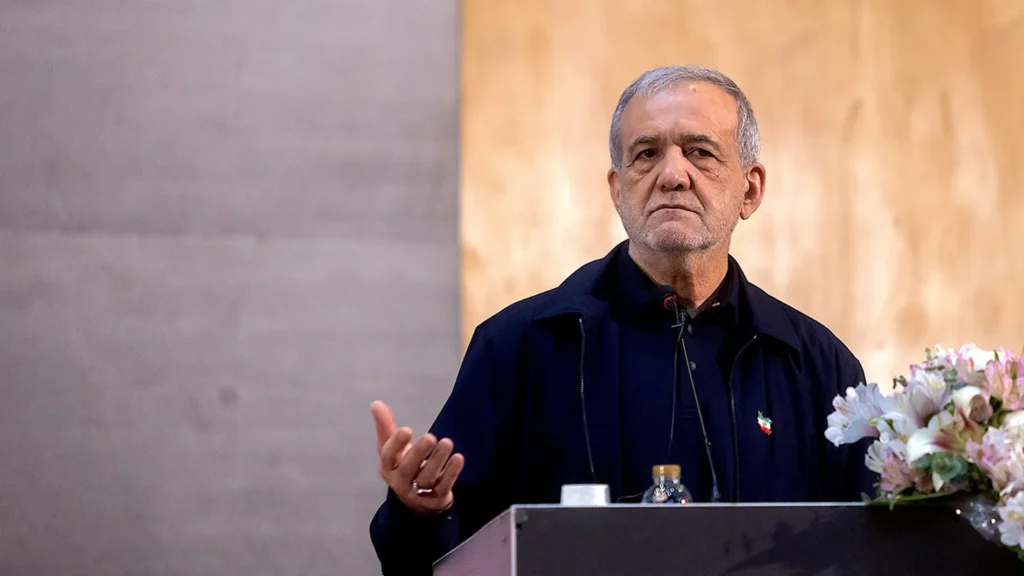
Iranian President Masoud Pezeshkian has acknowledged that the country is facing serious difficulties. At the same time, he has blamed foreign pressure for attempts to provoke unrest inside Iran.
The growing economic pressure is now raising questions about how long Iranian households—and the government itself—can withstand the strain.
Food Prices Surge Across Iran
Food inflation has become one of the clearest signs of Iran’s economic deterioration.
According to figures cited by Fox News, Iran’s annual food inflation reached between 112.5% and 113.8% in March 2026.
Some essential food categories experienced even sharper increases.
Bread and cereal prices reportedly rose by about 140%, while milk, cheese and egg prices increased by approximately 116.8% compared with the previous year.
For families already struggling with falling incomes and a weaker currency, such increases can make everyday groceries increasingly difficult to afford.
Reports of Grocery Theft Raise New Concerns
The latest concern comes from reports published by the Iranian newspaper Jahan-e Sanat.
According to an investigation cited by Fox News, supermarket employees described customers allegedly hiding inexpensive food products or consuming packaged goods inside stores without paying.
One employee reportedly described witnessing suspected thefts involving items including cheese, butter, cakes, pastries and meat.
These accounts are not proof of a nationwide increase in food theft. Nevertheless, analysts say they are consistent with broader evidence showing that Iranian consumers are facing severe financial pressure.
Iranian Rial Continues to Lose Value
The country’s currency crisis is adding another layer of pressure.
The Iranian rial has experienced a dramatic decline in value against the U.S. dollar.
According to figures cited in the report, the dollar reached approximately 1.5 million rials in January before exceeding 1.94 million rials on Iran’s open market in July.
When a national currency loses value rapidly, imported goods become more expensive.
That can also push up the cost of domestically produced products when manufacturers depend on imported materials, equipment or other inputs.
Pezeshkian Blames Foreign Pressure
President Masoud Pezeshkian has acknowledged the country’s difficulties but has also blamed external pressure for attempts to create unrest.
During a televised address on August 5, Pezeshkian said Iran was facing problems while arguing that foreign adversaries were trying to encourage people to protest.
The president maintained that Iran remained powerful and respected despite the challenges facing the country.
His comments come as economic hardship becomes a major concern for Iranian households.
Experts Warn Economic Pressure Could Fuel Protests
Economic hardship has historically played an important role in Iranian protests.
Iran experienced major demonstrations in November 2019 after the government sharply increased gasoline prices.
Analyst Miad Maleki, an associate fellow at the Foundation for Defense of Democracies, told Fox News that Iran’s history shows that economic crises can create serious challenges for the government.
However, he also cautioned that worsening economic conditions do not automatically mean the Iranian government will collapse.
Iran’s Islamic Revolutionary Guard Corps and Basij forces have previously demonstrated a willingness to suppress unrest, potentially limiting the political impact of economic dissatisfaction.
The Crisis Goes Beyond Food Prices
Although food inflation is receiving significant attention, Iran’s economic problems extend much further.
The country is dealing with a combination of:
- Rapid food inflation
- Currency depreciation
- Falling purchasing power
- International economic pressure
- Reduced access to imported goods
- Rising household financial stress
- Growing concerns about poverty and food security
Together, these pressures create a difficult environment for both consumers and businesses.
The result is an economy where people can see their purchasing power disappear even when their nominal income remains unchanged.
Why the Rial Matters to Ordinary Iranians
Currency depreciation may sound like an abstract economic issue.
For Iranian families, however, it can have very direct consequences.
When the rial weakens, imported products become more expensive. Businesses may also raise prices to compensate for higher production and transportation costs.
As prices rise faster than wages, households have less money available for food, housing, healthcare and other necessities.
That is why the currency crisis has become closely connected to Iran’s broader cost-of-living crisis.
Could Economic Pressure Lead to More Unrest?
One of the biggest questions is whether worsening economic conditions could trigger another wave of protests.
Analysts say that possibility cannot be dismissed.
Food is particularly sensitive because people can tolerate some increases in discretionary spending more easily than dramatic increases in essential groceries.
If large numbers of households begin struggling to afford basic nutrition, dissatisfaction could become more difficult for authorities to contain.
However, economic hardship alone does not guarantee political change.
The government’s security apparatus remains a powerful factor in determining how protests develop.
Iran’s Government Faces a Difficult Balancing Act
Tehran now faces a complicated economic and political challenge.
The government needs to protect vulnerable households while also dealing with inflation, currency instability and external pressure.
Authorities have attempted to provide limited financial support to consumers.
However, analysts argue that some policy changes, including the removal of certain subsidized exchange rates for imports, have contributed to higher prices.
That makes the government’s response increasingly important as the cost-of-living crisis continues.
A Warning Sign, Not Proof of Economic Collapse
Despite the alarming headlines, it is important to distinguish between signs of economic stress and proof of an imminent government collapse.
Reports of people stealing groceries are disturbing, but they are based on individual accounts.
They do not by themselves demonstrate that Iran’s entire economy is about to collapse.
What makes the situation more significant is the combination of those reports with verified economic indicators showing extremely high food inflation and a sharply weakened currency.
What Happens Next for Iran’s Economy?
The coming months could be crucial.
If inflation continues rising while the rial remains weak, Iranian households may face even greater pressure.
At the same time, any reduction in conflict-related economic disruptions could affect prices and consumer demand.
Analysts will also be watching for signs of renewed protests, changes in government economic policy and developments in Iran’s relationship with the United States and other major powers.
The Bottom Line
Iran’s economic crisis is increasingly affecting the everyday lives of its citizens.
Soaring food prices, a sharply weakened currency and reports of people struggling to afford basic groceries have created a worrying picture of economic hardship.
President Masoud Pezeshkian has blamed foreign pressure for attempts to fuel unrest. Meanwhile, analysts warn that prolonged economic pain could become a major challenge for the government.
For now, there is no evidence that Iran’s regime is on the verge of immediate collapse.
However, the combination of inflation, currency weakness and declining purchasing power represents a serious economic challenge that Tehran cannot easily ignore.
As the crisis develops, the question will be whether Iran’s government can stabilize the economy before financial hardship translates into broader social unrest.