

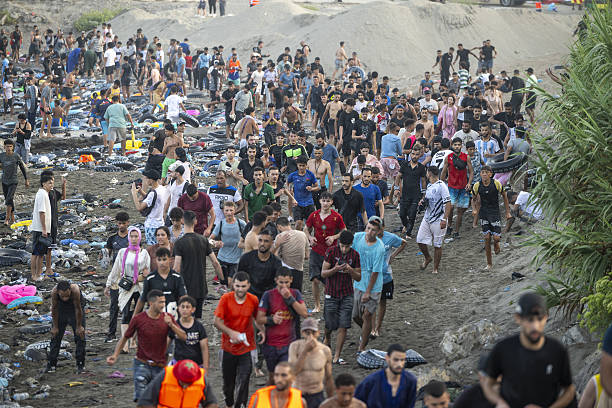

Spain and Morocco have moved quickly to restore order after one of the largest migrant crossings in recent European history overwhelmed the Spanish enclave of Ceuta.
Authorities say nearly 49,000 migrants crossed into Ceuta in just 24 hours, creating a humanitarian emergency that left at least 57 people dead and placed enormous pressure on emergency services, border security, and local infrastructure. By Friday, both countries had reinforced the border, slowing the flow of new arrivals while thousands of migrants voluntarily returned to Morocco.
A Record-Breaking Border Crossing
The unprecedented surge began on Thursday when tens of thousands of people entered Ceuta by land and sea from neighboring Morocco.
The sheer number of arrivals overwhelmed Spanish authorities, making it one of the largest single-day migration events ever recorded at the European Union’s southern border.
Officials reported that many migrants swam around coastal barriers or crossed through border areas before security forces regained control of the situation.
Dozens Killed During the Crossing
The humanitarian cost of the crisis has been devastating.
Spanish officials confirmed that at least 57 migrants died, with many victims drowning while attempting to swim into Ceuta. Others reportedly died in crowd crushes as thousands rushed toward border entry points.
Authorities warned that the death toll could increase as search and recovery efforts continue on both sides of the border.
Spain and Morocco Strengthen Border Security
In response to the emergency, Spain and Morocco coordinated efforts to reinforce security along the border.
Additional police officers and security personnel were deployed, while barriers and surveillance measures were strengthened to prevent further mass crossings.
Spanish officials said the joint operation significantly reduced the number of new arrivals by Friday, helping stabilize the situation after a day of chaos.
Thousands Return to Morocco
As conditions inside Ceuta became increasingly difficult, many migrants chose to return voluntarily.
Spanish authorities reported that more than 48,000 people had already gone back to Morocco by Friday evening.
Many migrants cited overcrowding, limited access to food and shelter, and uncertainty about their future as reasons for returning home.
Political Tensions Rise Across Europe
The border crisis has quickly become a major political issue throughout Europe.
Spanish Prime Minister Pedro Sánchez described the mass crossing as a serious violation of Spain’s territorial integrity and pledged to strengthen border security while expanding cooperation with Moroccan authorities.
The crisis also prompted reactions from several European governments. Italy temporarily suspended Schengen travel arrangements with Spain, while other EU leaders called for stronger external border protections and closer regional cooperation.
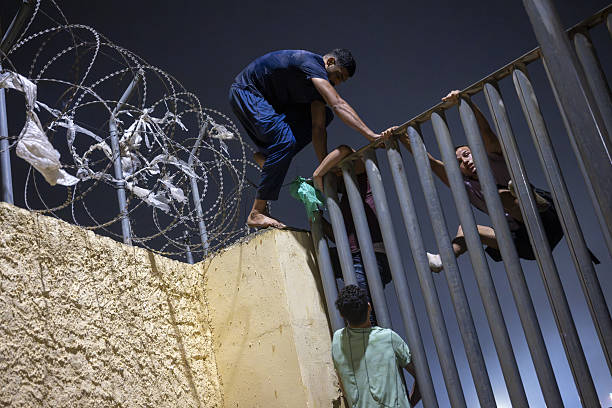
What Triggered the Sudden Surge?
Spanish officials believe people-smuggling networks exploited recent legal development s involving migrant processing to encourage large numbers of people to attempt the crossing.
Authorities also pointed to economic hardship, unemployment, and social media misinformation as factors that fueled the sudden movement of migrants toward Ceuta.
Moroccan officials have denied deliberately allowing the mass crossing and say they remain committed to working with Spain to manage migration through legal channels.
A Renewed Debate Over European Migration
The events in Ceuta have reignited debate over immigration policies across Europe.
Supporters of stronger border enforcement argue the crisis demonstrates the need for tougher migration controls, while humanitarian organizations continue to call for better protection of migrants risking dangerous journeys in search of safety or economic opportunity.
As investigations continue and diplomatic discussions intensify, the Ceuta crisis is expected to shape migration policy in Spain, Morocco, and the wider European Union for months to come