
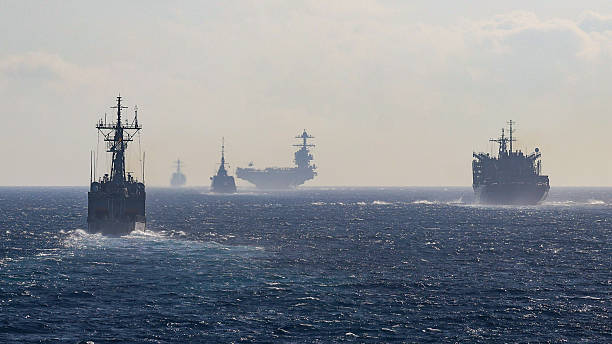

In the first 24 hours of President Donald Trump’s sweeping naval blockade of Iranian ports, U.S. warships issued warnings to six vessels – all of which turned around without a single shot being fired, a U.S. official told NBC News on Tuesday.
Five of the ships were carrying oil. The contents of the sixth were not immediately disclosed. Two of the oil tankers reversed course within the first two hours of the blockade, which went into effect Monday morning.
“No shots were fired,” the official said. “U.S. personnel did not board any of the vessels before they reversed course.”
100+ Aircraft, 15+ Warships Enforcing the Blockade
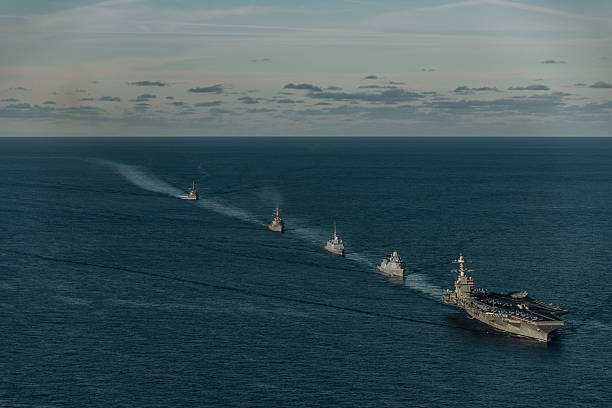
The scale of the U.S. military operation is massive. According to the official, the Pentagon has deployed:
-
More than 100 fighter and surveillance aircraft – including F-35s, F/A-18s, and P-8 Poseidons – to monitor shipping lanes and communicate with vessels.
-
More than a dozen warships positioned primarily in the Gulf of Oman, rather than the more confined and dangerous Persian Gulf.
The official explained the tactical reasoning: “The U.S. has more than a dozen ships in the Gulf of Oman and it does not make sense to move them to the Persian Gulf where they risk being in more danger.”
Instead, the U.S. uses surveillance aircraft, manned aircraft, and sea-based radar systems to identify ships leaving Iranian ports and coastal areas. Once those ships transit the Strait of Hormuz into the Gulf of Oman, U.S. forces contact them via radio and order them to turn back.
Where Do Turned-Back Ships Go?
Interestingly, the U.S. military directs intercepted vessels to return to Iranian ports in the Gulf of Oman – not back through the narrow Strait of Hormuz.
Why? Because the U.S. has “more options and assets in the Gulf of Oman to enforce the blockade,” the official said.
So far, no ship has refused a U.S. order to turn around. But if one does, the military has full authority to use force – including fighter aircraft or warships firing on the vessel.
One Chinese Tanker Allowed to Pass
The official clarified that not every ship transiting the Strait is being stopped. A Chinese tanker, the Rich Starry , was allowed to continue because it originated in the United Arab Emirates – not Iran.
“The Starry was not in violation of the U.S. terms of the blockade because it originated in the United Arab Emirates,” the official said. “The U.S. military did not order it to turn around.”
The official added they are not aware whether the Rich Starry or other passing ships have paid any toll to Iranian authorities.
Economic Shockwaves Already Felt
Since fighting began late last week, traffic through the Strait of Hormuz – through which 20% of the world’s oil passes – has been at a near-standstill.
Oil prices have already spiked, and the cost of key goods is rising globally. The blockade, announced by Trump after negotiations with Iran failed to end the war, is designed to pressure Tehran economically without immediate military escalation.
What Happens Next?
The first 24 hours of the blockade have been bloodless – a carefully calibrated show of force rather than a shooting war. But the Pentagon has made clear that force is authorized if vessels refuse to comply.
Key questions remain:
-
Will Iran attempt to test the blockade with a military-escorted tanker?
-
How will China, a major buyer of Iranian oil, respond to the interception of its vessels?
-
How long can the U.S. maintain a 100+ aircraft, 15+ ship operation without fatigue or incident?
For now, the Strait of Hormuz remains open – but only for ships that do not touch Iranian ports. The world is watching to see who blinks first.