



The USS Abraham Lincoln is facing growing scrutiny after an exceptionally long deployment in the Middle East raised concerns about the welfare, morale and working conditions of the thousands of sailors and Marines aboard the aircraft carrier.
The Nimitz-class carrier has been at sea for more than 240 consecutive days, a record-setting stretch that has placed additional pressure on its crew and raised questions from lawmakers about whether the deployment has continued for too long.
Reports from military-focused outlets and accounts from families have described concerns ranging from shortages of basic supplies and plumbing problems to deteriorating morale and mental-health struggles.
However, Defense Secretary Pete Hegseth has rejected the characterization of the ship’s conditions, saying reports about problems aboard the carrier have been “completely misrepresented.”
The conflicting accounts have put renewed attention on the challenges facing U.S. forces during prolonged wartime deployments.
USS Abraham Lincoln Has Been at Sea for Months
The USS Abraham Lincoln was originally deployed to the Asia-Pacific region before being redirected toward the Middle East as the conflict with Iran intensified.
The carrier has since supported U.S. military operations in the region while maintaining a high state of readiness.
The deployment has now stretched far beyond the length of a typical peacetime carrier deployment.
The Navy commonly plans carrier deployments around several months, although wartime conditions can require ships to remain deployed considerably longer.
For the sailors aboard the Lincoln, that has meant months away from family, limited opportunities to leave the ship and continued exposure to the demands of combat operations.
Reports Raise Questions About Conditions on Board
Concerns about conditions aboard the carrier have emerged from several sources.
Families of sailors have described problems involving basic supplies, food availability, plumbing and other aspects of life aboard the ship.
Lawmakers have also raised questions about reported water contamination, mail delays, deck safety and the availability of personal hygiene supplies.
Sen. Richard Blumenthal has called for answers from the Pentagon and Navy leadership regarding the reports.
The Connecticut Democrat said there have been widespread reports of shortages and deteriorating conditions and argued that the Navy needs to address whether the current pace of deployments is sustainable.
Mental Health Concerns Draw Congressional Attention
Perhaps the most serious concerns involve the mental health of sailors aboard the carrier.
Reports from military news organizations have described declining morale and alleged suicide-related incidents during the extended deployment.
CNN also reported that a sailor went overboard from the Abraham Lincoln earlier this month and was rescued within an hour.
Officials said the sailor was medically evaluated and transferred off the ship for additional care. The circumstances surrounding the incident remain under investigation.
The Navy has disputed suggestions of a broader increase in suicidal behavior aboard the carrier.
That disagreement underscores the difficulty of determining the full extent of mental-health problems within a deployed military unit.
Hegseth Pushes Back Against Reports
Defense Secretary Pete Hegseth has defended the Navy’s handling of the deployment.
Speaking Thursday, Hegseth said reports portraying the conditions aboard the Abraham Lincoln as severely deteriorated were inaccurate.
He praised the sailors for continuing their mission under difficult circumstances and emphasized that the Navy works to provide deployed crews with the resources they need.
Hegseth also pointed to the demanding circumstances created by the ongoing conflict and the reduced number of port visits available to deployed ships.
His comments come as pressure grows on the Pentagon to explain how the Navy is balancing operational requirements with the welfare of service members.
Why Long Deployments Can Be Difficult
Aircraft carriers are designed to operate for extended periods away from home.
However, prolonged deployments can place significant physical and psychological demands on sailors.
Crew members work long shifts in confined spaces while maintaining constant operational readiness.
They can also go months without seeing their families or stepping ashore.
When a ship remains deployed for an unusually long period, routine maintenance, resupply and morale can become increasingly important.
The situation can become even more demanding when the ship is operating in a combat environment.
The Iran Conflict Has Extended the Mission
The Abraham Lincoln’s deployment has been closely tied to the U.S. military’s operations involving Iran.
The carrier has supported American forces while operating in a region where drone and missile threats remain significant.
The United States has also maintained pressure on Iranian shipping and ports, creating additional operational demands for naval forces.
That strategic environment makes withdrawing the carrier difficult.
At the same time, the longer the deployment continues, the greater the strain on personnel and equipment.
USS George Washington Heads Toward the Middle East
A major development came Thursday when the USS George Washington began heading toward the Middle East.
The Pacific-based aircraft carrier departed Vietnam and has been observed moving through Southeast Asian waters as it heads toward the region.
A U.S. official said the George Washington is expected to replace the Abraham Lincoln.
Officials described the move as a pre-planned deployment rotation, rather than an emergency response to the reports about conditions aboard the Lincoln.
Nevertheless, the arrival of another carrier could provide the Abraham Lincoln and its crew with an opportunity to finally begin returning home.
The Replacement Creates a New Strategic Challenge
Moving the George Washington toward the Middle East also creates a challenge for U.S. military planners.
The carrier normally operates in the Asia-Pacific region.
Sending it toward the Middle East temporarily reduces the number of American aircraft carriers available in the Pacific.
That is significant because the United States is also closely watching China’s military activity in the Indo-Pacific.
Military planners therefore have to balance two major strategic priorities at the same time.
Lawmakers Demand Answers
The reports about conditions aboard the Abraham Lincoln have generated concern among members of Congress.
Lawmakers want the Pentagon to explain how the Navy determined that the prolonged deployment could continue safely.
They are also asking whether sailors have adequate access to food, medical care, mental-health services, clean water and other necessities.
The issue has become a broader question about military readiness.
A ship may remain operationally capable while the personnel operating it become increasingly exhausted.
For lawmakers, ensuring that service members can sustain long deployments is therefore part of maintaining the overall strength of the military.
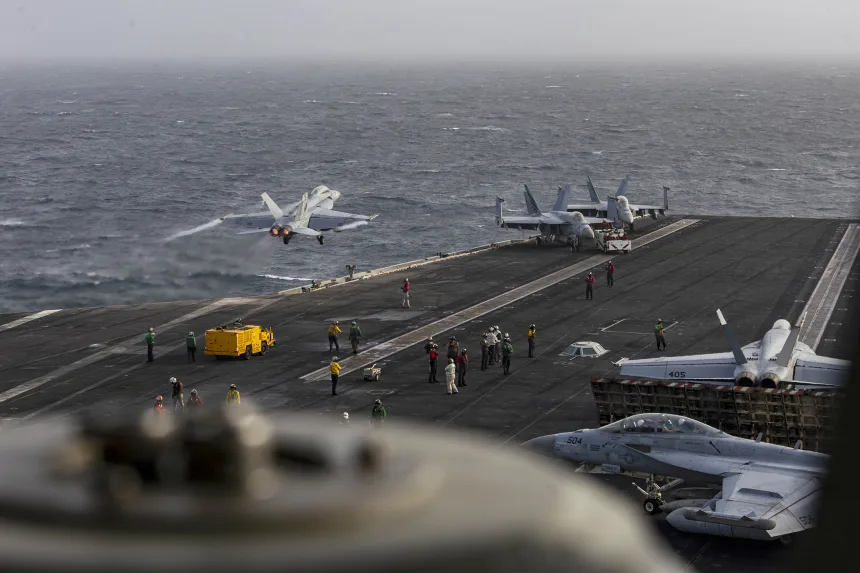
Navy Says Mission Requirements Remain the Priority
The Navy has maintained that mission-critical supplies and services remain available aboard the carrier.
Officials say food and hygiene requirements are being prioritized even as logistical challenges have made some supplies more difficult to deliver.
The Navy has also emphasized its commitment to supporting sailors experiencing mental-health difficulties.
The challenge is that a carrier operating continuously in a combat zone has fewer opportunities to receive the same level of support available to personnel stationed at a traditional military base.
A Record-Setting Deployment
The length of the Abraham Lincoln’s deployment is one of the most striking aspects of the situation.
Reports indicate that the ship has gone more than 240 days without a port call, setting a modern record for consecutive time at sea.
For comparison, normal carrier deployments are generally planned around significantly shorter periods, although wartime conditions can dramatically change those schedules.
The extended deployment demonstrates how the conflict with Iran has placed additional demands on the U.S. Navy.
What Happens to the USS Abraham Lincoln Next?
The immediate question is when the Abraham Lincoln will finally leave the region.
If the George Washington takes over its mission as planned, the Lincoln’s crew could soon begin the process of returning home.
However, the exact timeline remains dependent on military operations and conditions in the Middle East.
The Navy will also need to assess the ship’s equipment, maintenance requirements and the physical condition of its crew after such an extended deployment.
The Bigger Issue: U.S. Navy Readiness
The controversy surrounding the Abraham Lincoln goes beyond one aircraft carrier.
It highlights the growing demands being placed on the U.S. Navy as American forces respond to multiple global security challenges.
The United States needs naval forces in the Middle East while simultaneously maintaining a strong presence in the Pacific and other strategically important regions.
That creates a difficult balancing act.
Ships and crews cannot remain deployed indefinitely without consequences.
Eventually, military planners must rotate personnel, repair equipment and restore the readiness of forces returning from extended missions.
What We Know So Far
Several facts are clear amid the competing accounts.
- The USS Abraham Lincoln has been deployed for more than eight months.
- The carrier has spent more than 240 consecutive days at sea.
- The ship has been supporting U.S. military operations in the Middle East.
- Families and lawmakers have raised concerns about supplies, plumbing, mail and crew welfare.
- Reports have also raised concerns about mental health among sailors.
- A sailor went overboard earlier this month and was rescued.
- Defense Secretary Pete Hegseth says reports of severely deteriorating conditions have been misrepresented.
- The Navy says it remains committed to supporting the crew.
- The USS George Washington is heading toward the Middle East and is expected to replace the Abraham Lincoln.
The Bottom Line
The USS Abraham Lincoln extended deployment has become a major test of U.S. Navy readiness and the military’s ability to sustain personnel during prolonged wartime operations.
The carrier’s crew has spent months at sea supporting U.S. operations in the Middle East, while reports of supply problems and mental-health concerns have prompted lawmakers to demand answers.
At the same time, Pentagon officials insist that some of the reports about conditions aboard the ship have been exaggerated or misrepresented.
The arrival of the USS George Washington could provide an important turning point.
If the replacement proceeds as planned, the Abraham Lincoln and its crew may finally receive the relief they need after one of the longest deployments in recent U.S. naval history.
The situation will continue to be closely watched—not only because of the welfare of the nearly 5,000 personnel aboard the carrier, but also because it illustrates the broader strain being placed on the U.S. military by an increasingly demanding global security environment.